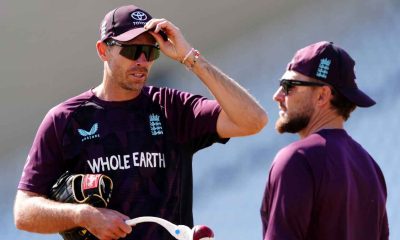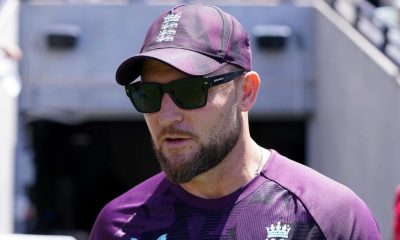
In what feels like a lifetime since events in that chaotic two-day Perth Test, the Ashes series is ready for more twists and turns as England go in desperate search of a response at the Gabba in a day-night contest, beginning on Thursday morning (04:00 UK start).
Australia’s eight-wicket win in the opener was the fifth consecutive series in which they have drawn first blood and whilst England launched an impressive recovery from 2-0 down in the 2023 home series, they simply can not afford to be playing catch up to that level Down Under if they are to hold any hope of regaining the urn.
A golden opportunity spurned in Perth as England now face having to overcome a dismal record in Brisbane, so often a ground in which they have endured a nightmare start but this time around what feels like the series is already on the line.
Here, we take a look at five key areas that have dominated the lengthy build-up to the second Ashes Test.
(Jason O’Brien/PA)
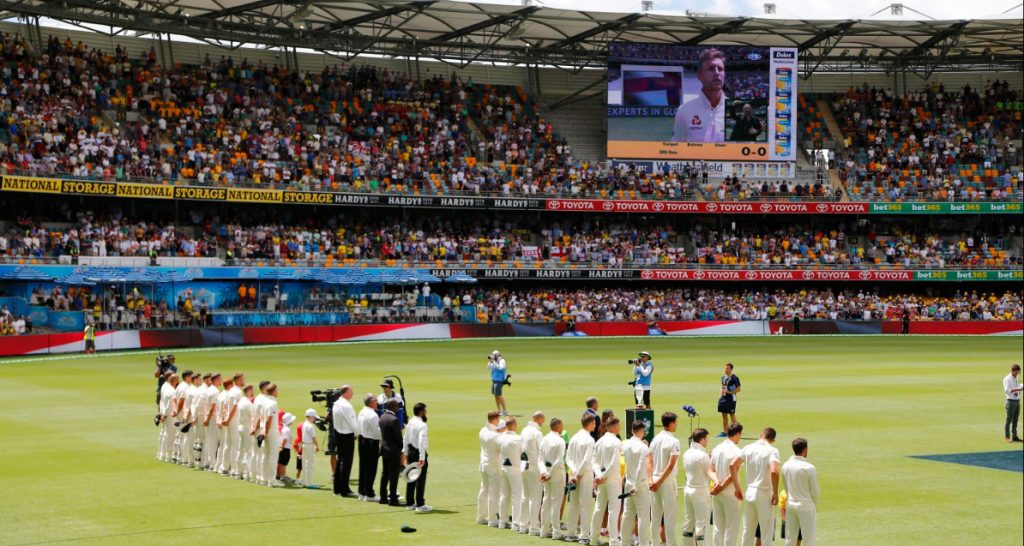
Can England become the latest team to breach the Gabba fortress?
Traditionally host to the curtain-raiser of an Ashes series Down Under, Brisbane has not proved a happy hunting ground for touring English sides of the past with their most recent Test win in the Sunshine State coming way back in November 1986.
Australia have won five out of six Ashes Tests at the ground in the 21st century – a high-scoring draw at the start of the famous 2010-11 series the one time England escaped without defeat in that period – with the most recent contest widely remembered for Rory Burns being bowled by Mitchell Starc off the first ball of the match.
It has not just been England on the receiving end though, as the Aussies went 31 Tests unbeaten between 1988-2021 which saw the iconic venue earn its ‘Gabbatoir’ nickname.
However, despite Australia’s historic dominance at the Gabba, England may be able to take some encouragement from the hosts only winning two of their last five Test matches there – having previously recorded seven straight wins – which included India chasing 328 in the fourth innings and the shock pink-ball defeat to a Shamar Joseph-inspired West Indies as opener Steve Smith was left stranded in a dramatic eight-run heist.
Day-night challenge awaits
Joe Root and Michael Atherton have both questioned the necessity of having a day-night Test match in an Ashes series but it has become a staple of the Australian summer since the first one took place against New Zealand ten years ago.
The revolutionary pink-ball phenomenon has not taken off around the rest of the cricketing world as perhaps intended, with the Gabba Ashes Test hosting what will be Australia’s 14th day-night contest in a history of 25 international matches, credited to their ideal conditions and public buy-in.
Unsurprisingly, they have forged a formidable record in securing 12 victories at home, whilst they remarkably bowled out West Indies for just 27 in their only away pink-ball Test held in Jamaica earlier this year.
By contrast, England have hosted just the once – West Indies in 2017 – and have only played on one occasion during the Bazball era early in 2023 which means a large degree of unfamiliarity in comparison.
Unpredictable
To highlight the inexperience, Jamie Smith and Gus Atkinson have never played a first-class game with a pink ball prior to this series.
Records suggest England face an uphill battle to avoid going 2-0 down but in reality, a pink-ball Test which has never previously been a draw could well provide an unpredictable nature that opens the door for the tourists if they are smart.
Another Test on the extreme shorter end of the scale like Perth can not be ruled out, with a new ball under the floodlights able to dramatically speed up a game after periods of lull in which batters are generally able to benefit from less-testing conditions early on.
The toss is also likely to play a crucial role in the respective game plans to maximise the favourable conditions, with both teams expected to bat first – England set a blueprint against New Zealand in 2023 when they declared their first innings in just the 59th over in order to bowl when the floodlights took action and it may well be that their approach to bat positively instead of time could work to their benefit.
(Robbie Stephenson/PA)
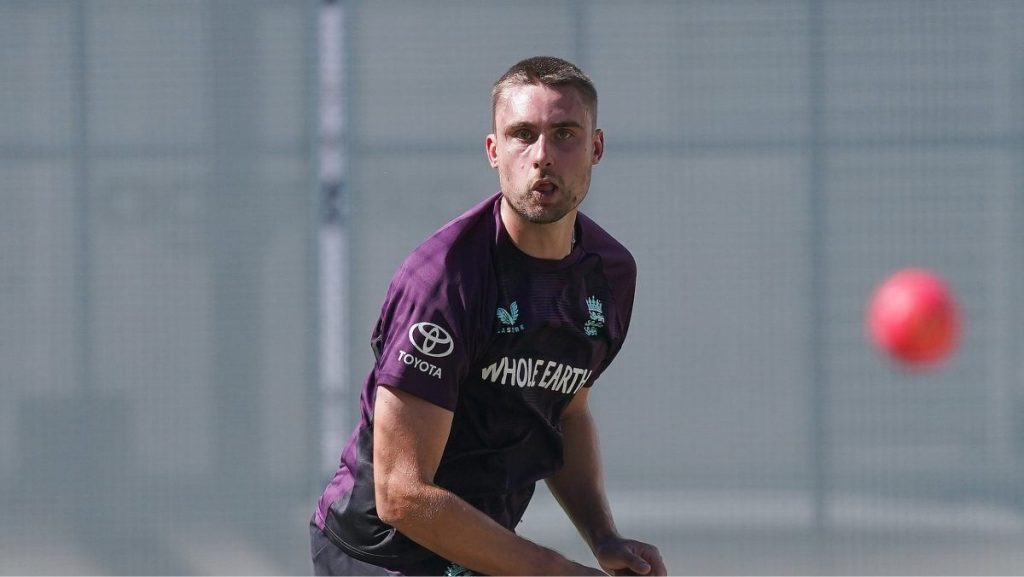
Enter Will Jacks
A wildcard selection when the Ashes squad was named after playing just three first-class matches during the 2025 domestic season, with more eyebrows raised following the Surrey batting all-rounder’s inclusion in the XI for the second Test.
Jacks, who claimed six wickets on debut in his first of two Test appearances against Pakistan in 2022, has replaced the injured Mark Wood as England opted to include a spinner rather than a like-for-like switch in Josh Tongue.
The white ball specialist has also been preferred ahead of frontline spinner Shoaib Bashir, despite the consistent backing shown by Ben Stokes and Brendon McCullum over recent years to essentially groom the 22-year-old with this tour in mind.
Whilst Jacks’ tall action to generate bounce is a plus point, it is his primary ability as an aggressive ball-striker to provide more depth in the lower order which has ultimately tipped the scales in his favour.
Impressed
It is perhaps a damning indictment of England’s current spin bowling stocks that his selection feels more with the intention of strengthening the batting line-up in mind, or maybe a lack of confidence in the top seven to deliver.
How much the 27-year-old will be required with the ball from a tactical element in terms of helping to rotate the fast bowlers and fill a holding time remains to be seen but Nathan Lyon’s 43 pink-ball wickets at a supreme average of 25.62 has proven that spin can play an important support role in conditions more suited to the fast bowlers.
Although that record is predominantly underpinned by greater success at the Adelaide Oval and there is a scenario in which he is left out of the team as was the case in the Caribbean.
Jacks impressed during the internal warm-up match at Lilac Hill ahead of the first Test, removing Joe Root, Harry Brook and Ben Stokes, whilst also striking a rapid 84 off 85 deliveries.
A calculated gamble perhaps but an opportunity for an unlikely England hero.
Travis Head ton papered over cracks
Travis Head is set to continue at the top of the order in the injury absence of Usman Khawaja, following his brutal assault on the England bowlers in that evening session on day two of the Perth Test.
Elevated to partner debutant Jake Weatherald for the final innings run chase, his stunning swashbuckling century completely shifted the narrative around what had been up until that moment a fairly even contest with the bowlers from both sides firmly on top.
For England, it is important to remember just how impressive their pace attack was for a sustained period in that first innings to dismiss the hosts for just 132 – only two times they have been bowled out for fewer runs at home since 2010.
Not for some time has an Australian batting line-up looked so uncomfortable on their own patch, consistently copping nasty blows, as England’s long-term strategy to deploy a high-octane bowling unit showcased its worth.
Effective
Australia’s recent batting struggles still linger, regardless of Head’s heroics, with the challenges that come with the pink ball added to the mix.
Steve Smith’s average of 37.04 in day-night Tests is a considerable drop-off from his standard record, whilst Jake Weatherald and Leeds-born Josh Inglis – expected to come into the side in the middle order – are both still new to the Test arena.
On the other hand, Marnus Labuschagne has proved to be their best batter against the pink ball with an average of 63.86 and recording four of his 11 centuries in the format, whilst Head’s counter-attacking style could once again be effective in what may well be another fast-moving contest.
On what will be another surface offering pace and bounce, England know they have the personnel to suit effective ‘hard lengths’ as they demonstrated in Perth and can cause similar problems once again with their battery of quicks, though they will be relying on the batters to provide them with a more sufficient recovery period this time around as the evident drop off in pace called into question their robustness.

England batters vs Mitchell Starc
Mitchell Starc wrecked havoc in the first Test with match figures of 10-113 and worryingly for England, the pink ball is his trump card.
The day-night destroyer-in-chief has established himself as the premier pink-ball bowler with 81 Test wickets at a stunning 17.08 average (28.97 in traditional red-ball matches), ably supported by his long-term bowling partners who have all enjoyed tremendous success with the pink pill in hand, though not quite to the same level of upturn as Starc.
The numbers show that not only does Starc bowl consistently higher average speeds with the pink ball but he also manages to maintain significant movement through the air for longer periods which proves a perfect combination with his natural fuller length.
If it is any consolation to England, Starc’s record at the Gabba across seven day-night innings is a much more ordinary one though with 15 wickets at 31.26.
Once again, the hosts will be without Pat Cummins and Josh Hazlewood, though a last minute return for the captain is still being teased.
Tested
Scott Boland, who has 18 pink-ball wickets at a ridiculous 13.16, will once again provide a fascinating matchup with England’s top order, whilst Brendan Doggett and Michael Neser – who has played two day-night Tests previously – are likely vying for one spot.
There is no question that England are capable of out-bowling Australia but it is their batting frailties that will once again be under the spotlight – or floodlights in this instance.
How will Zak Crawley handle the pressure from his first over pair? Can Ben Duckett and Ollie Pope build on their starts in the first Test? How will Joe Root fare on the ground he came closest to a century Down Under last time around?
Discipline when the ball is in the channel outside off-stump will once again be tested after a number of soft dismissals in Perth, whilst applying themselves to the fluctuating conditions will be decisive when it comes to playing with intent when the pitch suits or how they stand up to the challenge when the floodlights take effect and the true nature of pink-ball mayhem ensues.
READ MORE: Ben Stokes reassures Shoaib Bashir after England hand Will Jacks Ashes chance


Latest News
BACK TO THE FUTURE


County Championships
County Championship 2025: Middlesex Season Preview

County Championships
Young players to watch in the 2025 County Championship season

ICC Champions Trophy
What now for England and Jos Buttler after Champions Trophy exit?