Ashes
What will Perth’s new fortress have in store for England and Australia in the Ashes opener?


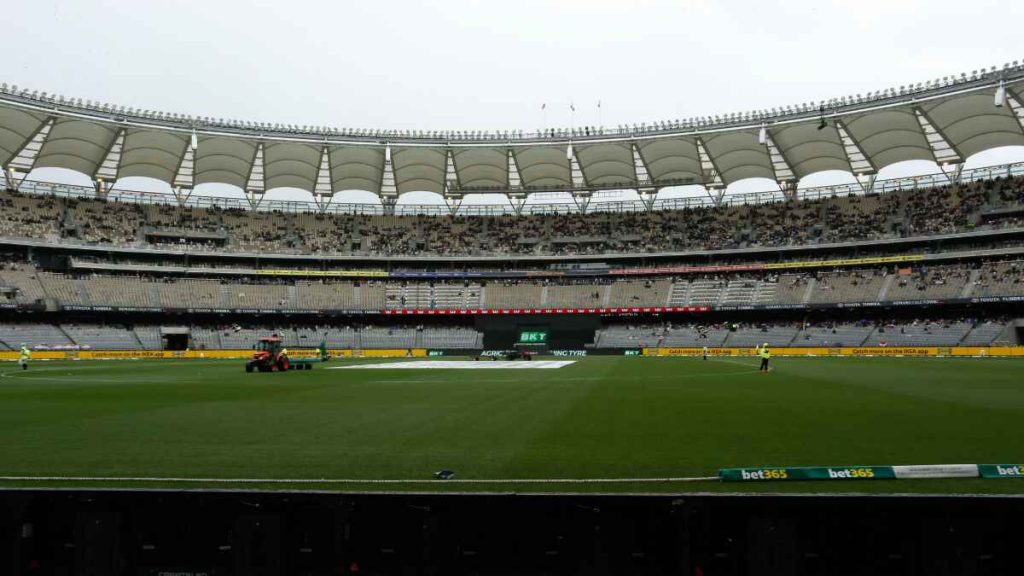
The 60,000-seater Optus Stadium will become the eighth Ashes venue in Australia as Perth prepares itself to launch an Ashes series for the first time since 1982-83.

The 60,000-seater Optus Stadium will become the eighth Ashes venue in Australia as Perth prepares itself to launch an Ashes series for the first time since 1982-83.
The highly-anticipated ‘West Test’, beginning on November 21, will be the first time England have played a Test at the new ground – located across the Swan River from its predecessor, the WACA Ground – after strict Covid protocols meant the most recent 2021-22 fifth Test was located in Hobart instead.
Still over two weeks out from the first ball, what do we already know about the Optus Stadium in its seven years as a Test venue?
For exclusive stories and all the detailed cricket news you need, subscribe to The Cricket Paper website, digital edition, or newspaper from as little as 14p a day.
History says bat first
It has seemingly been a preference for England under Ben Stokes to field first for their ‘have-a-chase’ ethos, particularly in home conditions, but early history at the Optus Stadium heavily leans to the bat-first mantra historically favoured by Australia on their own patch.
Since opening in early 2018, Perth’s slick new stadium has hosted five Test matches, with all five being won by the team who had opted to bat first, including India, who upset the apple cart by becoming the first visiting side to triumph when they beat Australia by 295 runs in the first Test of the 2024-25 Border-Gavaskar Trophy.
That margin of victory is also a familiar tale, with the four previous Tests all requiring a fourth innings target in excess of 450 – we know this England team would not shirk such a challenge though.
Stokes has insisted his decisions have been purely conditions or stats-based rather than a pre-determined tactic, vindicated for his bowl-first tendency in the opening Test against India at Headingley – despite the visitors’ dominance on day one – but then backfired in their crushing Edgbaston defeat in the second Test.
Despite the narrative, though, Stokes has actually opted to bat first on six out of eight instances in which he has won the toss away from home in Test cricket.
Not since Nasser Hussain’s infamous “we’re gonna have a bowl” at the Gabba in 2002-03 has a captain opted to field first at the start of an Ashes series Down Under, though it will remain to be seen if Stokes calls correctly whether he will buck that trend.

Unleash the quicks
The pace departments for both sides are set to play a crucial role in the outcome of the series.
Australia are sweating on the fitness of their captain Pat Cummins, who has officially been ruled out of the first Test, and will be relying on an ageing Josh Hazlewood and Mitchell Starc to last the course.
Meanwhile, England have durability concerns of their own – notably Mark Wood, who is set to return after more than a year out – but on paper arrive having successfully assembled their most hostile group of fast bowlers in decades, ready to tackle the Aussies head on.
Whilst it is clearly far too early to make any sort of suggestion around the pitch, the Optus Stadium has typically closely replicated the former WACA Ground, which gained a reputation as one of the fastest and bounciest wickets in the world.
Debates are rumbling as to whether England will select wildcard Will Jacks ahead of frontline spinner Shoaib Bashir, or even opt for an all-pace attack for the first two Tests, which will also reduce the burden on captain Ben Stokes.
Australia pacers have the edge
Teams have fielded seam-heavy attacks often without a specialist slow bowler to date at the Optus Stadium, unsurprising when spinners have only claimed 10 out of 71 wickets to fall across the previous two Tests.
Australia pacers have had the edge over their visiting counterparts over the five Tests, averaging 22.97 compared to 31.36 respectively.
Whilst spin is typically less effective, Australia have benefitted from having world-class spinner Nathan Lyon in their ranks, who has a superb average of 22.2 at the venue, whereas overseas spinners average in the region of 100, which may influence England’s selection decision.
First innings runs have been significant, but the November 2024 Test against India demonstrated there will likely be plenty in the surface for the bowlers as 17 wickets fell on a remarkable day one, and the prospect of landing an early blow on Australia’s somewhat fragile batting unit may yet come into the thinking.
Josh Hazlewood recently played a starring role during Australia’s seven-wicket victory over India in the first ODI at the Optus Stadium, taking 2-20 from seven overs, and was keen to see a similar surface prepared for the Ashes, in which the Indian top order found it a struggle to build any momentum against the new ball.
England were questioned for their decision to rest James Anderson and Stuart Broad for the opener in 2021-22, with an eye on maintaining freshness for the pink ball Test, whereas this time around it feels more a case of fighting fire with fire to land a crucial early blow.
A vital opportunity for the tourists
England have traditionally started poorly in Ashes series, with an early defeat Down Under often setting in motion waves of unrelenting Australian pressure that is near impossible to ride.
However, there are positive signs that England have a real chance to take a rare 1-0 lead against Australia, before heading to the Day-Night Test at Brisbane in which the hosts hold a formidable pink ball record.
Firstly, this is the first time in over 40 years that the Gabba has not hosted the Ashes opener, where England have a notoriously bad record in losing seven of their previous nine Test matches.
Not that their record in Western Australia is any better, winning just once in 1978 and losing the previous eight contests, but at least this is a new ground for the England Test side with no baggage of previous struggles, whilst Australia will still have fresh memories of being bundled out for 104 in their defeat to India last year.
Australia will also be without their talismanic captain Pat Cummins through injury, and whilst Scott Boland represents a very useful replacement in home conditions, it does significantly weaken their batting capabilities in the lower order, which could be decisive as was evident at Edgbaston in 2023.
Fired-up pace cartel
England’s pace cartel will also smell blood to make early inroads against an Australia top order under immense pressure to deliver after their struggles in the Caribbean, with Marnus Labuschagne set to undertake an unfamiliar opening role after an impressive run of domestic form.
In the hope of not tempting fate, England are on course to have a full complement of their bowlers available for Perth, with Ben Stokes recovering from a shoulder injury sustained against India in the summer, Mark Wood and Gus Atkinson stepping up their preparations out in New Zealand, whilst Jofra Archer has continued his fine rhythm in white ball cricket and demonstrated promising signs of robustness.
Whilst many will raise concerns around the form of key batters during the recent One-Day International series against the Kiwis, England do hold a 100% win record in the first Test of all five tours in the McCullum-Stokes era, and it certainly feels that avoiding defeat in Perth at the least will go a long way to England’s chances of rewriting the script Down Under.
READ MORE: Key Duels of Ashes 2025: The eternal chess match between Joe Root and Nathan Lyon