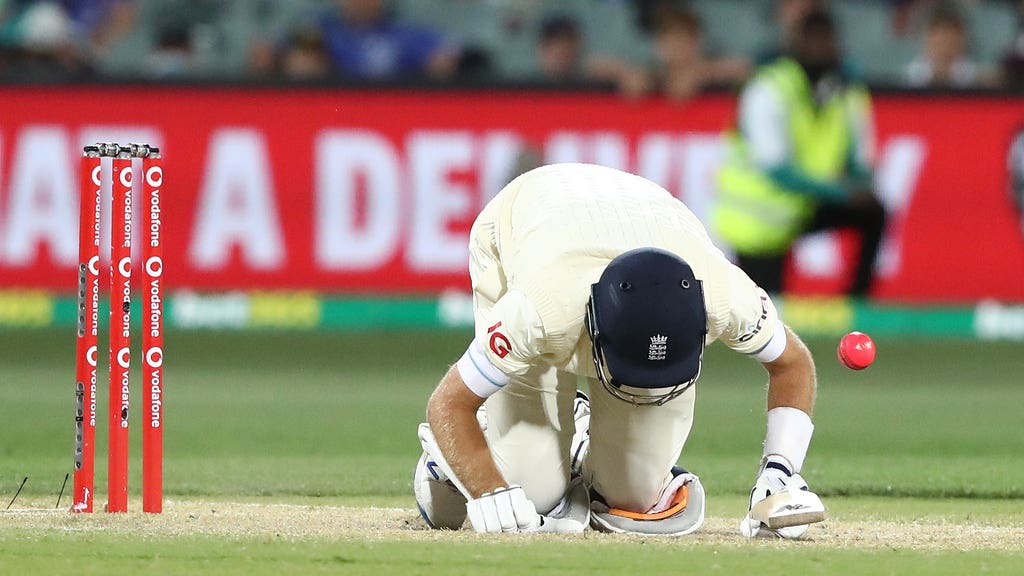

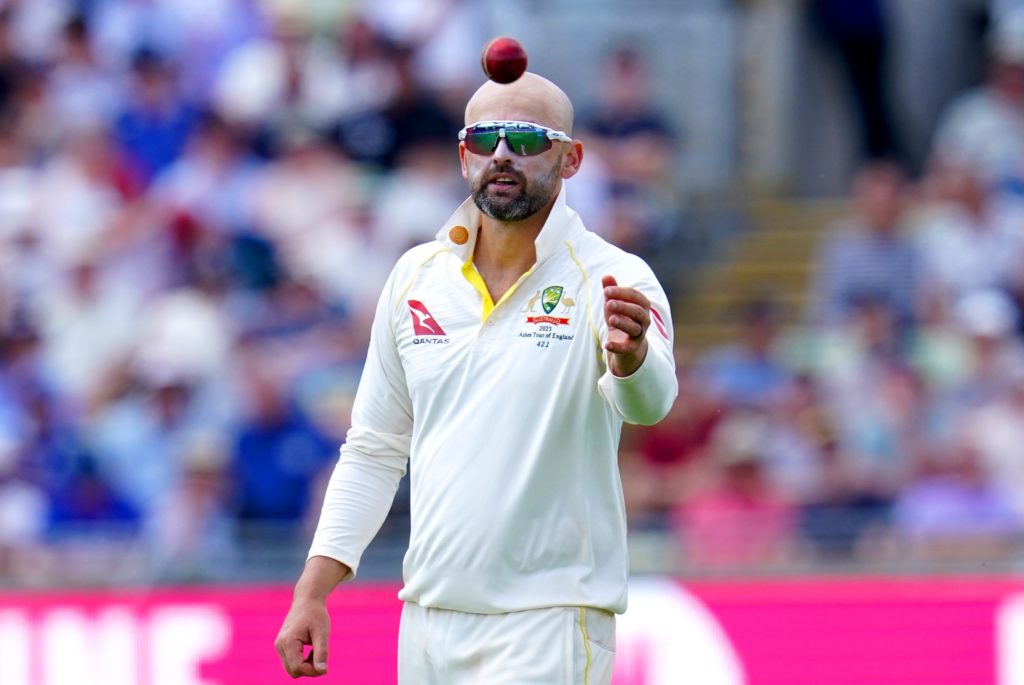
Against the backdrop of belligerent strokeplay, the duel between the red-hot Joe Root and Nathan Lyon feels quietly different.
The Ashes, for a fleeting spell, glides from rib-cage testers or sharp-tongued exchanges, and buries itself in subtle adjustments, rhythm, longevity and mental resilience.
Over a dozen years, this match-up has become one of the underrated backbones of the Ashes. It almost resembles a chess match, but played with a 1200 gram English willow and a tired red cherry.
Across seven Ashes against the finger spinner, Root has churned out 439 runs off 841 balls, succumbed eight times, and struck at 52.2 with a robust average of 54.9.
For exclusive stories and all the detailed cricket news you need, subscribe to The Cricket Paper website, digital edition, or newspaper from as little as 14p a day.
From early struggles to a mature
Their story began in 2013, when Root’s Test tally stood at just 424 runs and Lyon’s career wickets totalled a modest 76.
Put differently, Root was still finding his feet in Test cricket and Lyon was establishing himself as Australia’s first-choice spinner.
Scraping through the numbers from their first Ashes series reveals the refinement that the 22-year-old Root’s game required.
In 2013-14, when Ashes unfolded across English and Australian soil, the Yorkshireman made only 62 runs from 140 balls and was dismissed three times.
Lyon’s drift, bounce and overspin repeatedly exposed Root’s initial indecision, particularly when he played across the line or with a closed face.
By 2015, Root’s response to that challenge was clear. He began sweeping more decisively and trusting his hands rather than his front pad.
The home Ashes series in 2015 was productive for the right-hander. He faced the Australian veteran 111 times across the series, and notched up 83 while keeping his wicket intact.
It stood as a testament of how much he had improved at neutralising Lyon’s angles. It was a sign of maturity, he had learned not to overplay spin on surfaces that offered little turn.
Lyon, being someone who has bowled 6,981 deliveries in Ashes, adjusted too. By the 2019 Ashes, his plan to Root was built on subtle variations of pace and drop.
The New South Wales spinner often played with the trajectory and stationed close-in catchers on the leg side, tempting Root to defend with bat and pad close together.
That approach paid dividends: Lyon dismissed Root three times in the 2019 series alone, all poached in at close catching cordons. As a result, the campaign ended with Australia retaining the urn.

(Ben Whitley/PA)
The numbers beneath the rivalry
Despite yielding more than 400 runs, Lyon’s figures against Root capture both control and perseverance.
Of the 841 deliveries bowled to Root, 566 have been dots, roughly two-third of their exchanges end in silence. That is an unusually high containment rate in modern Test cricket.
For every over Root faces, four deliveries on average bring no runs. Lyon’s accuracy, coupled with his patience, has forced the former England skipper to create scoring opportunities rather than wait for loose balls.
Root’s own scoring profile offers a complementary story. Against Lyon, he has hit 33 fours and four sixes, meaning that nearly 36 per cent of his runs come from boundaries.
When Root attacks, he tends to do so decisively. The rest of his scoring comes in nudges, deflections and quick singles, which speaks to his method: soft hands, angles, and strike rotation to break Lyon’s rhythm.
The influence of batting position
Perhaps the most revealing stat emerges from where Root bats. At his customary position of number four, he averages an extraordinary 140.0 against Lyon in the Ashes, scoring 280 runs off 511 balls for just two dismissals.
The reason is simple. At number four, Root usually arrives once the new ball has softened and Lyon’s overs begin later, allowing him to assess the pitch and start in control.
By contrast, at number three, Root averages just 21.8, with 109 runs from 214 balls and five dismissals.
The difference is not about skill but timing. Facing Lyon earlier in the innings means less settled conditions and a harder ball that grips unpredictably. It also allows Lyon to attack with more men around the bat.
Lyon’s methods and Root’s responses
For Lyon, the plan has rarely changed. Bowl a fraction outside off stump, vary flight and speed, and use the natural bounce of Australian pitches to draw the error.
Root’s dismissals to him have often been the result of thin edges to slip or inside edges onto pad. Lyon’s strength is repetition, rarely a big turner, always a spinner who asks the batter to play.
Root’s success, when it comes, depends on movement and intent. His key adjustment has been to use the crease more, going deep to cut and late-sweep, or advancing down the pitch to smother spin.
In the most recent Ashes, Root took this to extremes. At Edgbaston, he repeatedly reverse-swept Lyon early in his innings, forcing the off-spinner to change his line.
He scored 51 off 63 balls against him that summer, striking at 81.0, proof that aggression can work when applied with calculation.
What to expect in 2025
The record books tell you that they’ve risen through the ranks side by side.
Lyon, now 37, with over 560 Test wickets, has been Australia’s constant in a decade dominated by fast bowlers.
Root, with more than 13,500 Test runs, has been the fulcrum of England’s batting order since Alastair Cook’s retirement.
When they meet again this November, Root’s challenge will be to maintain the proactive intent he showed in 2023 without falling into traps.
But Lyon will try to do what he’s always done: build pressure, draw soft shots, and force the batter to leave or play across the line.
His willingness to bowl long spells, stick to a corridor, and vary pace subtly has punished many greats.
And against the second-highest run-scorer in Test match history, those margins can be decisive.
READ MORE: Key Duels of Ashes 2025: Ben Stokes challenges Pat Cummins in the battle of nerves




County Championships
County Championship 2025: Middlesex Season Preview

ICC Champions Trophy
What now for England and Jos Buttler after Champions Trophy exit?

County Championships
Young players to watch in the 2025 County Championship season