County News/The Hundred
Why The Hundred remains flawed as a showpiece event for English cricket


Despite producing high-quality cricket and attracting bigger crowds, The Hundred still has questions to answer over player opportunities, squad management and its relationship with the wider domestic game.

By now, all the criticisms associated with The Hundred have been well-documented – the gimmicky attempts to build hollow identities, the excessive broadcast coverage hype, the fundamental lack of tradition and tribalism essential for English sport fandom, as well as the severe knock-on effects to the beloved county game in the height of summer and further hinderance to the 50-over format.
All of that is very much the case. But that aside, the 2026 edition of The Hundred has delivered some high-quality cricket with pretty stacked teams, a good contest between bat and ball (not the ‘slogathon’ of the IPL) and a reasonable competitive balance between sides, whilst crowds also appear to be on the rise after a sluggish start.
For some of the positive action on the field though, The Hundred has still felt like it is lacking as England’s self-declared flagship domestic competition.
Some of England’s big names have shone like Jofra Archer, Jos Buttler and Ben Duckett (scoop dismissals aside), whilst some of the overseas recruits such as Rashid Khan, Mitch Marsh and Rachin Ravindra have had their moments, but the same recycled names fail to add a uniqueness beyond the format and it struggles to shake the feeling of an exhibition-like tour around the country.
Dom Harris looks at the strengths and shortcomings of The Hundred.
For exclusive stories and all the detailed cricket news you need, subscribe to The Cricket Paper website, digital edition, or newspaper from as little as 14p a day
A not so James Coles summer
London Spirit forked out an auction-high £390,000 for Sussex all-rounder James Coles.
Whilst the price may have felt a tad steep for a player with no international games under his belt, there was no surprise around the demand for the 22-year-old, who recently earned his first England call-up.
You would imagine the Spirit hierarchy would have envisaged more than five runs from their major auction investment during the first half of the competition.
Coles’ high score of two in three innings is a hugely underwhelming return but spending nearly 400k on an all-rounder to bat at No.6 in a 100-ball contest and rarely fulfil their allocation with the ball appears a slight oversight.
That is not to say it is possible to effectively utilise all players in such a compressed length of innings.
Are domestic stars being underused?
In an era where the value of all-rounders in limited overs cricket has boomed, recent developments such as the impact player in the IPL and the Hundred format has perhaps placed greater emphasis on specialist top order batters and frontline bowlers.
Australia’s Marcus Stoinis is the only genuine all-rounder to feature near the top of both the batting and bowling charts so far.
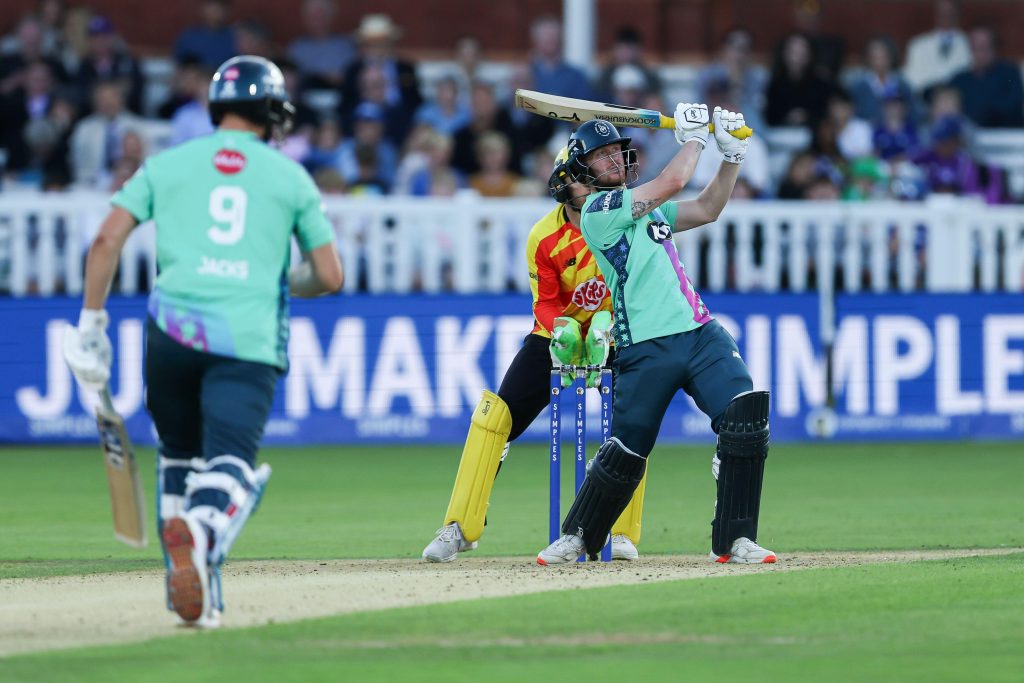
Elsewhere, Jordan Cox – 2025 MVP for champions MI London/Oval Invincibles with 367 runs at No.3 – has been primarily used by his new side Welsh Fire at No.5, despite the £300,000 price tag.
He has shown glimpses but ultimately facing a total of 51 deliveries across five games has not made the most of his talent for a Fire side with an abundance of top order options at their disposal.
Both Coles and Cox may yet come to the party but at the moment there is the feeling that this campaign is passing by two of England’s prominent domestic talents.

PICTURES: Alamy
Wasted talent
From ineffective utilisation to outright lack of utilisation.
Northamptonshire Steelbacks were crowned champions of the T20 Blast last month which saw seven of their players deservedly earn Hundred deals.
David Willey and Calvin Harrison have featured regularly with the ball, though Willey has found himself at No.8 in the London Spirit batting lineup, despite batting consistently at No.4 for the Steelbacks.
Saif Zaib has batted at No.7 and not bowled in his two games for Southern Brave which makes him near enough a specialist fielder, whilst the pace trio of Ben Sanderson, George Scrimshaw and James Sales (25 wickets in the T20 Blast) have not been seen.
There are countless examples of domestic talent spending much of this period patiently watching on from the other side of the boundary – Jafer Chohan, Henry Crocombe, Max Holden, Dan Mousley, Tawanda Muyeye and Joe Weatherley (leading run-scorer in the T20 Blast) are a selection of names across various Hundred squads who have not yet been named in an XI.
Too few opportunities?
Glamorgan’s Asa Tribe and Ben Kellaway added a local identity to the Welsh Fire squad but you would be forgiven if you barely noticed their presence.
Tribe was shunted down the order as low as No.7, whilst Kellaway has only been called upon to bat or bowl once in his five matches.
Nye Donald’s overdue debut blitz for the Trent Rockets was the evidence, if needed, that less glamour names from the T20 Blast can be relied upon to deliver if given the exposure.
With the addition of a fourth overseas permitted this year, it could be argued we are not truly seeing the best of the domestic pool outside the England inner circles which could raise the question around the potential for tournament expansion in the future as seen in the IPL.

Finding a balance
Each franchise has roughly four to six spare squad members and given the general lack of alterations made to line-ups, there still appears to be a reluctance to release players back to their counties in order to be playing competitive cricket in the One-Day Cup.
This leads back to the debate around Jacob Bethell and the IPL earlier in the year, with Kevin Pietersen’s argument that simply being around the franchise environment is just as good for a player’s development, if not better, than playing cricket in a competition deemed inferior – many opposed this line of thought.
ECB Chair Richard Thompson last year described The Hundred as the ‘clear challenger brand to the IPL’, a reasonable statement given the incoming level of private investment.
The tournament motto “Where Talent Meets Opportunity” is engraved on the IPL trophy.
Beyond its economic appeal and star power on show, the IPL year-on-year has also become a pathway for emerging domestic players to showcase themselves under pressure on the biggest stage and become breakout stars that often go on to represent the national team.
If the Hundred was to have their own Emerging Player of the Year award, you would struggle to come up with a list of contenders thus far.
Sonny Baker perhaps? Though he is already somewhat of a household name now after his England debuts across all formats and has demonstrated his skillset previously in the competition.
To play, or not to play
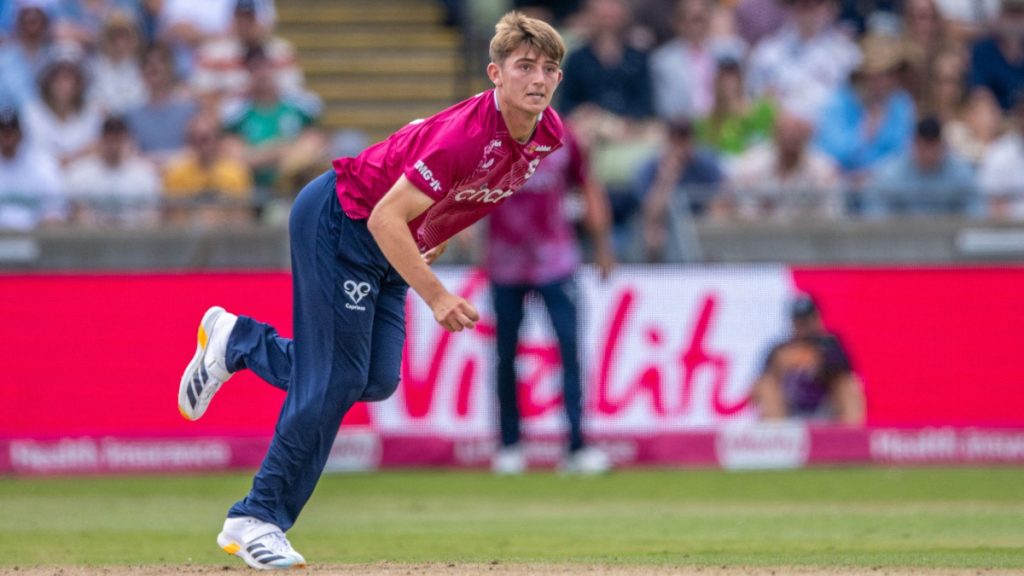
An 18-year-old Thomas Rew picked up an injury after scoring 41 on debut for Southern Brave – they opted to replace him with 39-year-old Moeen Ali off the back of a very average T20 Blast campaign for Yorkshire, whilst overseas all-rounder Nikhil Chaudhary has filled in at No.3 despite modest returns.
That is despite signing England under-19 batter Caleb Falconer in the auction, as well as Michael Pepper who has been a strong performer on the county circuit for a number of years and previously been on England’s radar.
The 17-year-old quick Manny Lumsden, the only Hampshire player in the Brave squad, has not played a game for nearly a month.
Perhaps not surprising given they possess an attack of Jofra Archer, Chris Jordan and Luke Wood but less clear as to why he has instead missed up to five 50-over games for his county.
This is also the case for Hampshire’s 18-year-old batter Ben Mayes who has watched on as £350,000 overseas signing Tim David averages 13 at a strike rate of 90 for Trent Rockets.
Replacement rules raise questions
Meanwhile, 20-year-old pace bowler Eddie Jack and teenage all-rounder Seb Morgan were both picked as wildcards by MI London, effectively preventing their involvement for the majority of the One-Day Cup group stages.
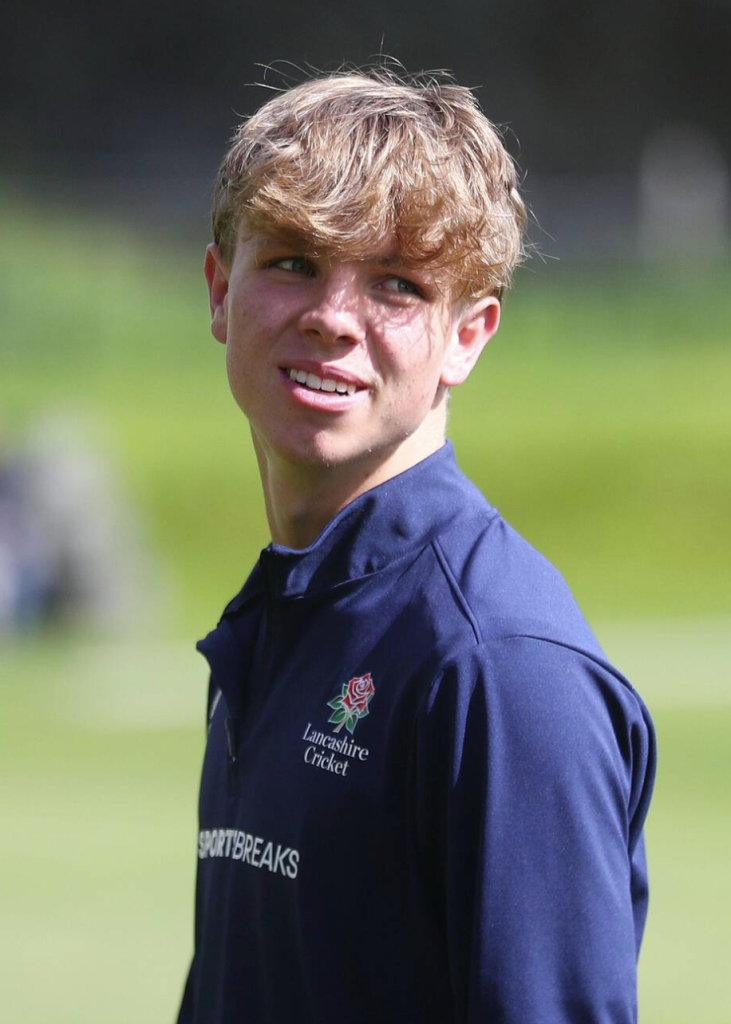
London Spirit have just announced the replacement signing of Lancashire starlet Joe Moores, one of many young players to impress in the ongoing One-Day Cup.
The 17-year-old wicketkeeper-batter replaces the injured Tymal Mills, a 33-year-old left-arm seamer – the like-for-like rules are clearly not as strict as substitutes in the County Championship.
It is hoped he has been called-up to play, otherwise Lancashire’s chances of qualifying for the knockout stages have been unnecessarily dented, whilst it also degrades the auction squad-building process if franchises still need to dip into the county pool after one injury.

Is the One-Day Cup still serving the domestic game better?
The IPL has forged this reputation, meanwhile The Hundred – still in its relative infancy – does not appear to be adding any real value other than a fancy repackaged Blast which the big boys are now allowed to get involved with.
Yes, the squads look good on paper. Yes, the majority of the overseas signings enhance the spectacle. But is the English talent really benefitting from it?
Meanwhile, the One-Day Cup, whilst with little choice, is providing that platform for players to gain first-team experience in a competitive environment against still a large number of established country pros.
Noah Thain’s scintillating form with the bat for Essex, the next generation of England pacers getting overs under their belt, Leicestershire and Middlesex mixing it with the big boys for silverware – there are plenty of compelling storylines, and good-quality cricket, throughout regardless of the lack of media focus.
The fact there remains a strong appetite amongst fans who have packed out the more relaxed venues is a welcome bonus, though not a surprise.
Opinions and narrative will not change either way. Debates around the longevity of the two competitions will rumble on.
But they both ultimately serve their own purpose, though The Hundred needs to fine-tune theirs, with cooperation needed in order to make the domestic game collectively stronger.
READ MORE: Anthony McGrath backs One-Day Cup as Yorkshire’s youngsters shine