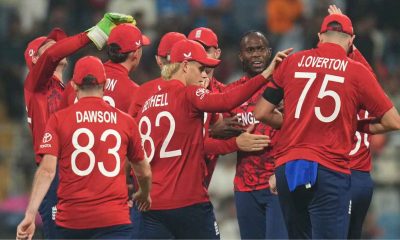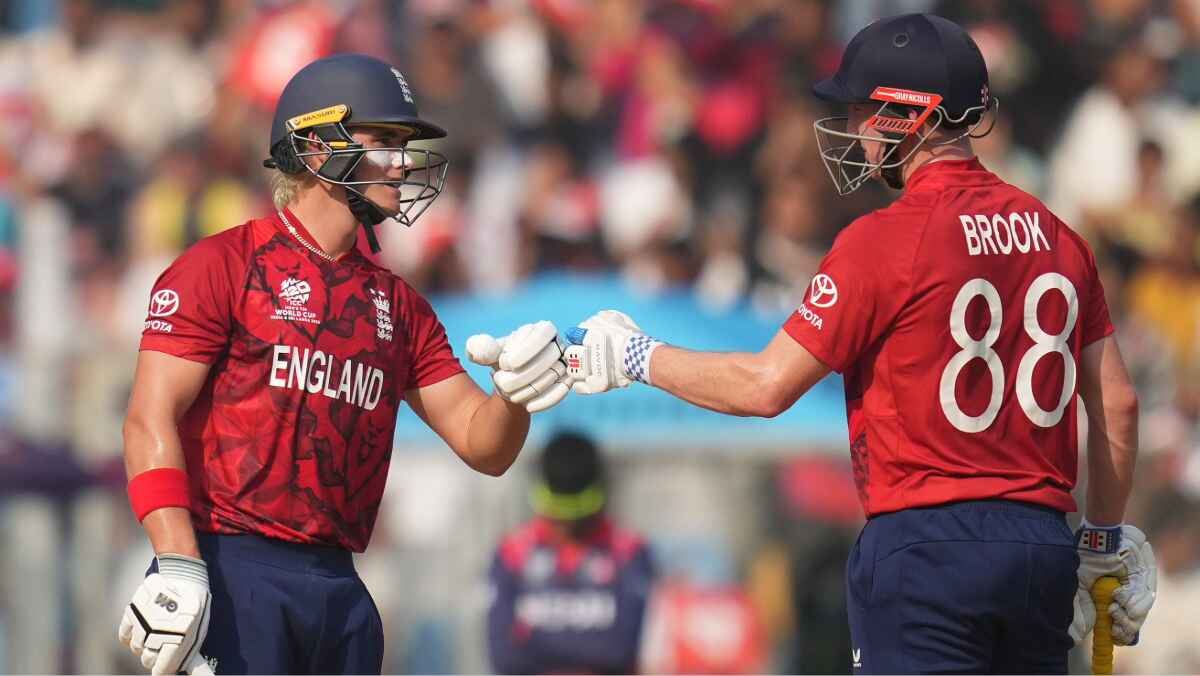
The T20 World Cup burst into life over the weekend as India and England were among the sides to avoid a major scare at the hands of Associate nations.
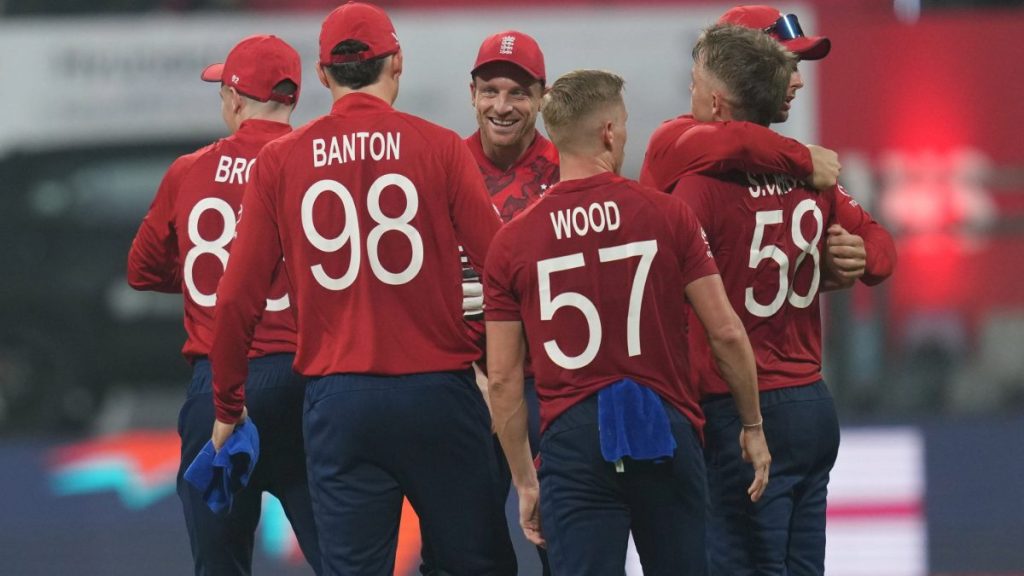
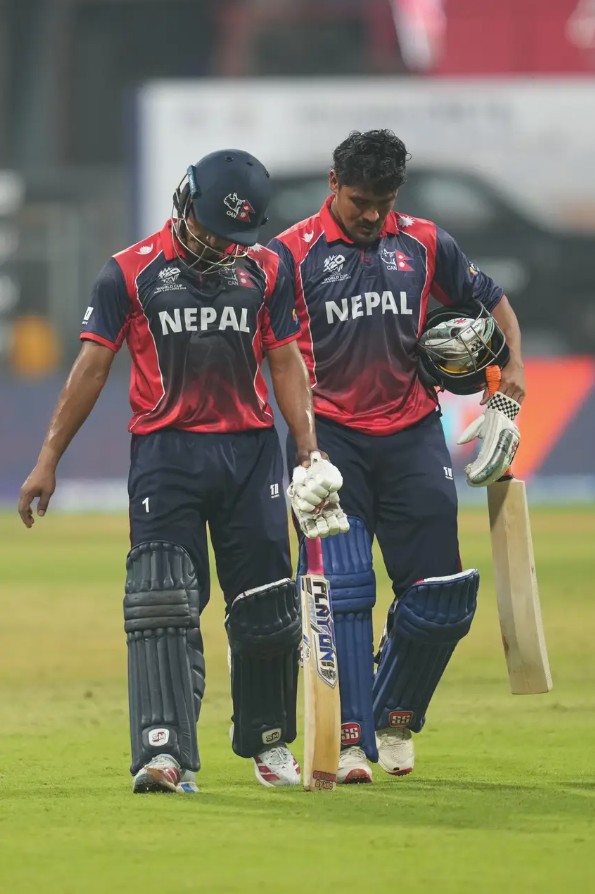
The hosts ultimately prevailed with a degree of comfort against USA after slipping to 77-6 at a stunned Wankhede Stadium, though just a day later the same venue almost witnessed one of the all-time biggest shocks in T20 World Cup history as Nepal came within five runs of defeating England in a final over nail-biter.
They nevertheless won the hearts of fans all over the world for their fearless approach and passionate support emanating from the stands.
The commendable efforts of Associate nations was a welcome distraction against the backdrop of the off-field politics which dominated the build-up as attention finally turned to the action in what is already proving to be an enthralling 10th edition of the competition.
The wait goes on to see who may produce a giant-killing this time around, a common feature of previous iterations, but we are already witnessing signs of an increasingly global format waiting to explode, even if the system remains built around one money-driven fixture.
For exclusive stories and all the detailed cricket news you need, subscribe to The Cricket Paper website, digital edition, or newspaper from as little as 14p a day.
FOLLOW OUR LIVE SCORES CENTRE FOR T20 WORLD CUP UPDATES
The promise
The Men’s T20 World Cup may only be a few days old, but has already produced a number of captivating contests, albeit without a headline shock to show for it.
Despite the opening flurry of fixtures all going the way of the higher-ranked side, that does not quite tell the full story – Netherlands let slip a position of control late on against Pakistan in the tournament opener, Nepal came within one hit of a stunning victory over England and USA had the pre-tournament favourites on the ropes until an inspired innings by India captain Suryakumar Yadav.
Scotland, Ireland and UAE have also all displayed promise against superior opponents so far but a combination of lower order batting depth, some loose bowling and fielding lapses have proved costly when matches were considered to be in the balance.
(Rafiq Maqbool/AP)
Growing exposure
The ICC often face scrutiny for the way in which it governs the game, though expanding the number of participants at global events was a widely popular decision.
The ongoing T20 World Cup is the second edition with 20 teams competing at the main event, allowing for eight qualified Associate nations – though Scotland’s inclusion as a late replacement for Bangladesh has that figure at nine.
Even the more traditional 50-over World Cup will revert back to 14 teams next year – two groups of seven – replacing the more exclusive ten-team Round-Robin format in 2019 and 2023.
The T20 format continues to be the great leveller though, not only as a more entertaining product for the casual audience but also providing the best and most accessible opportunity for smaller nations to be competitive on any given day given the volatile nature of the format.
Current climate
There may still be plenty of room for progress but many Associate nations find themselves on an exciting path in T20I cricket.
The growth of franchise leagues have expanded beyond the leading Test-playing nations, with the ILT20 in the UAE competing alongside Australia’s Big Bash League and South Africa’s SA20 for the overseas talent pool.
America’s Major League Cricket has also had three successful instalments and attracted many of the game’s leading white-ball talents with 50% IPL-backed ownership, whilst the much smaller-scale Nepal Premier League has achieved immense commercial growth as a festival of cricket in the region since being founded two years ago.
The European T20 Premier League between three national boards is also set to launch this summer with a number of big names and significant investors recently revealed.
Whilst many cricket fans hold opposing views on the sheer volume of franchise leagues, these developments have certainly provided a platform for domestic players to play consistent high-quality and competitive cricket, though opportunities on the international stage remain somewhat limited.
The majority of Associate nations only played a handful of T20I matches last calendar year, despite not having to schedule any Test cricket alongside, with many arriving at the T20 World Cup months on from their previous international outing.
Potential
Meanwhile, Nepal and UAE were the only Associate nations at the World Cup to face a top eight-ranked side in 2025 outside of the Asia Cup (West Indies and Pakistan respectively), whilst Namibia had a one-off contest against a second string South Africa.
Afghanistan’s remarkable rise to Full-Member status in the 2010s is the benchmark that the likes of Namibia and Nepal aspire to, with the additional funding that could elevate them to the next level as a cricketing nation.
The potential of Nepalese cricket in particular, both on and off the field, is not a true reflection of every Associate nation though, with the opening performances of Canada and Oman at the World Cup an indication of mismatches that still remain.
Upgrades to ICC membership are a rarity – Afghanistan and Ireland (both 2017) are the only new additions since Bangladesh in 2000 – with emphasis on performance and domestic infrastructure, though with T20 as the vehicle of growth, Associate nations would welcome a more equitable distribution than the reported 11.19% of total revenue they share in the current model (88.81% between the 12 Full Members – over half of which goes to the Big Three).
(Rafiq Maqbool/AP)
The future
So how can international cricket continue to facilitate its global expansion in the T20 format?
Well even on the current trajectory, Associate nations will consistently improve with exposure on the global stage, though could more be done to accelerate their development and even open the door for a further tournament expansion in years to come?
The schedule has become one of the biggest talking points in cricket to suitably accommodate both the saturation of T20 franchise leagues and the World Test Championship, meaning integrating Associate nations more fully within the calendar is a lot easier said than done.
Even bilateral series between Full-Member nations have seemingly lost a degree of significance over recent years, though could the established sides help to reignite that interest by committing to annual fixtures with Associate nations and actively support their growth?
Just imagine the hype and interest surrounding a T20I tri-series in Nepal between the hosts, England and India for example, even if the tourists both sent more development sides due to scheduling constraints.
Franchise cricket
Can franchise cricket also play a role? Domestic players in the ILT20 and MLC already benefit from sharing the dressing room with an influx of high-profile overseas names – the incoming regulation on permitted quota of overseas players in an XI to four (currently nine in the ILT20) will also provide greater opportunity for local talent to showcase themselves on the field.
There have also been calls for the major leagues such as the IPL, BBL or The Hundred to introduce an Associate ruling that would require each franchise to have at least one player on their roster from an emerging nation for greater exposure who would otherwise likely be overlooked, though this may be difficult to implement as teams prioritise acquiring more experienced overseas stars.
In international football, despite the introduction of the Nations League as a means to create more competitive competition between equally-matched teams, UEFA’s qualification structure for major tournaments has regularly provided the opportunity for smaller nations to test themselves against the best.
The same cannot be said for cricket, and whilst the future pool of active nations in the Test arena may be becoming increasingly sparse, the T20 format has arguably never been in a stronger position and that presents an opportunity to capitalise by bridging the gap beyond World Cup-inspired storylines every two years.
READ MORE: T20 World Cup: Barbados-born Jacob Bethell says England-West Indies clash is ‘just another game’


International News
Cricket analysis: All you need to know ahead of IPL 2026


County Championships
County Championship 2025: Middlesex Season Preview

County Championships
Young players to watch in the 2025 County Championship season

ICC Champions Trophy
What now for England and Jos Buttler after Champions Trophy exit?