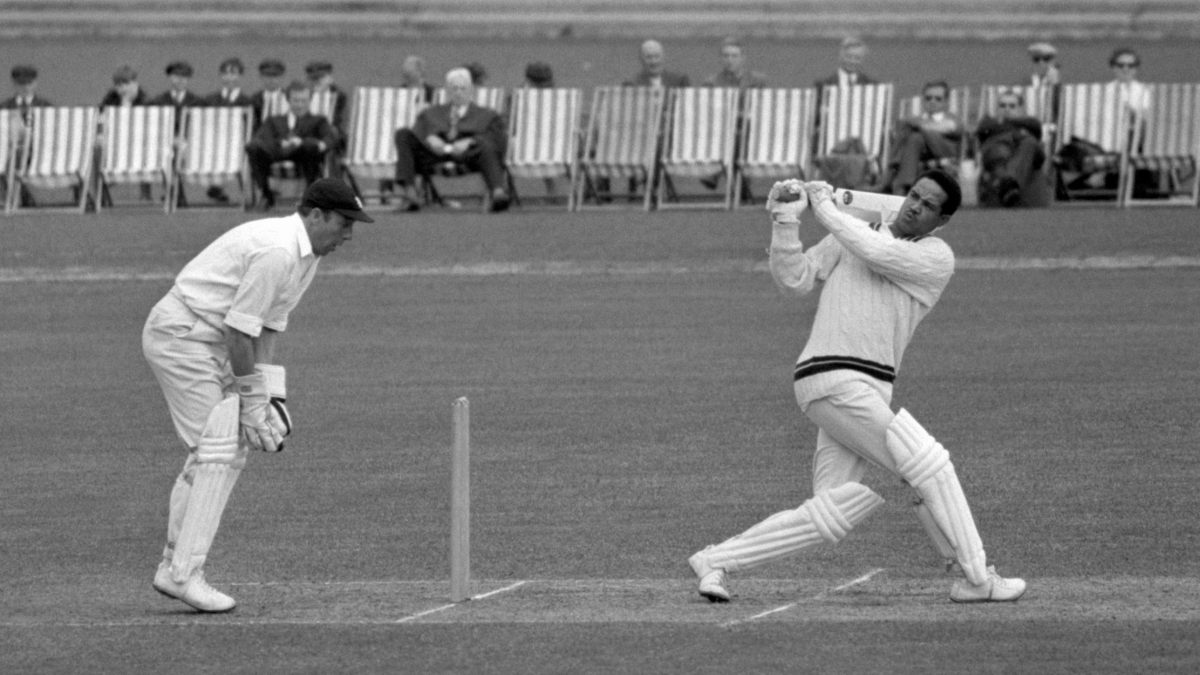
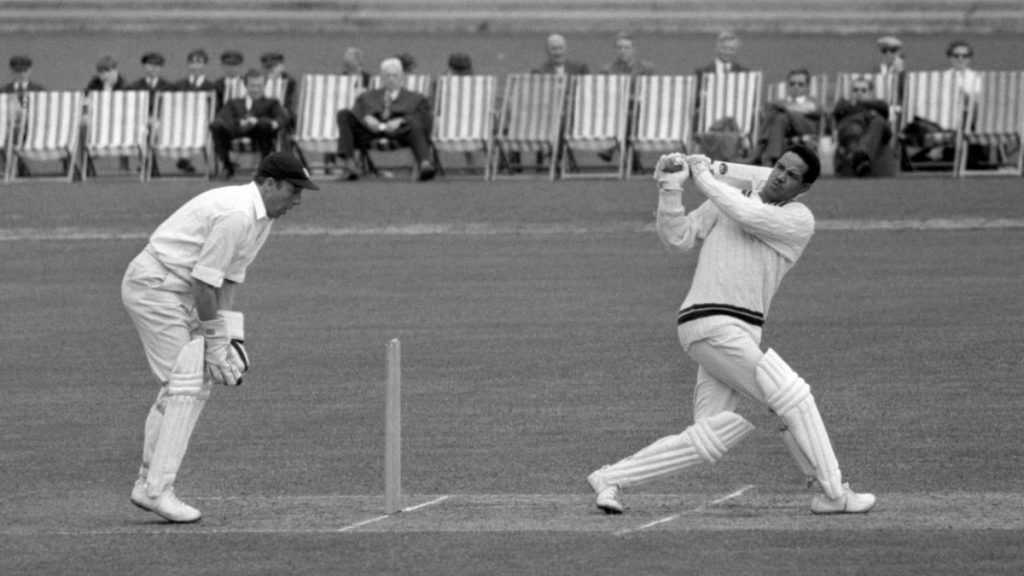
That Garry Sobers was great is not in question.
When Wisden asked a 100-strong panel to choose five cricketers of the century in 1999, he strolled it – his 90 votes trailing Bradman’s full house, but way ahead of the third-placed Hobbs’s 30.
American sports have given us the GOAT acronym for Greatest Of All Time.
The aged Joe DiMaggio used to insist on being introduced as the Greatest Living Ball Player. This too is as subjective as it gets, but a broad consensus still emerges in many sports.
All-round talents
So you get Wayne Gretzky in ice hockey, Gareth Edwards in rugby union, Michael Jordan for basketball, Babe Ruth in baseball, Pelé in football, Sugar Ray Robinson (purely as a boxer), Muhammad Ali (when other factors are included), and Garry Sobers.
All demand evidence of all-round talents, rather than mastery of one – a proviso Bradman comes closest to overcoming, because of the sheer uncanniness of his batting numbers.
Cricket demands all-round talent.
Yet if Sobers had done nothing else in cricket he would still be competing with Jack Hobbs, George Headley, Viv Richards and Sachin Tendulkar for the title of “greatest ever batsman who wasn’t Bradman”.
And that’s before you throw in the 235 Test wickets from an extraordinary range of bowling styles – the slow left-arm that got him his debut at 17 years and 245 days, a left-arm wrist spin and left-arm fast-medium good enough that he sometimes took the new ball ahead of Wes Hall or Charlie Griffith, and predatory, cobra-quick fielding.
GOAT
Sobers certainly had rivals for GOAT.
Before him there were WG Grace, Wilfred Rhodes, Walter Hammond, Keith Miller and Vinoo Mankad.
Sobers himself felt that the tragic Collie Smith would have been greater, and there was that remarkable 1980s quartet of all-rounders.
Ian Botham looked a real challenger before it became clear he would decline as soon as his pure physical talent and power began to erode. Imran Khan probably gets closest.
More recently statistical arguments have been constructed for Jacques Kallis. Kallis is a magnificent cricketer anyone would want in their team, but he has always seemed constrained by the rhythms of the match and his own game.
Sobers consistently seized matches and bent them to shapes of his own choosing.
Cultural investment
Sobers is also, on every count, a great West Indian.
As the islands’ finest historian, Hilary Beckles has written: “West Indian people had made their greatest single cultural investment in cricket.”
James called Sobers: “West Indian potential expressing itself in a sphere where the circumstances are made to order.”
You might argue that makes him a West Indian analogue of Shakespeare.
The inheritor of battles fought by Learie Constantine, James and Worrell to end the plantation dominance of both West Indian cricket and West Indian politics, Sobers was (and few were not) less sophisticated than that trio, Murray or Viv.
But he was fully appreciative of the battles they had fought and the forces they had combatted.
He had seen the battle for a black captain, and for the independence of the various islands, and was aware of broad West Indian identity as some since have not been.
Harold Pinter wrote of his hero: “I saw Len Hutton in his prime, another time, another time.”
I saw Garry Sobers on my first day of Test cricket, and feel uncommonly lucky.
READ MORE: Sir Garfield Sobers dies aged 89 as ‘greatest innings comes to an end’


County Championships
County Championship 2025: Middlesex Season Preview

ICC Champions Trophy
What now for England and Jos Buttler after Champions Trophy exit?

County Championships
Young players to watch in the 2025 County Championship season