Ashes
Second Ashes Test post-mortem – England and Bazball on the brink vs Australia


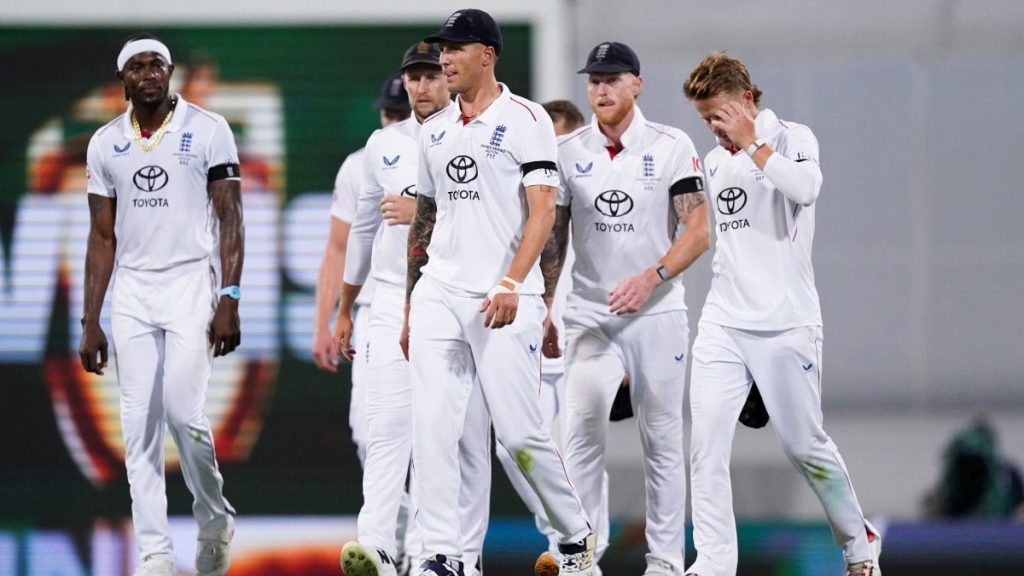
Where to begin with England? On the wrong end of yet another chastening defeat by Australia at the Gabba, a winless record Down Under extended to 17 matches and the most highly-anticipated Ashes series for a generation all-but over after six days of cricket.

Where to begin with England? On the wrong end of yet another chastening defeat by Australia at the Gabba, a winless record Down Under extended to 17 matches and the most highly-anticipated Ashes series for a generation all-but over after six days of cricket.
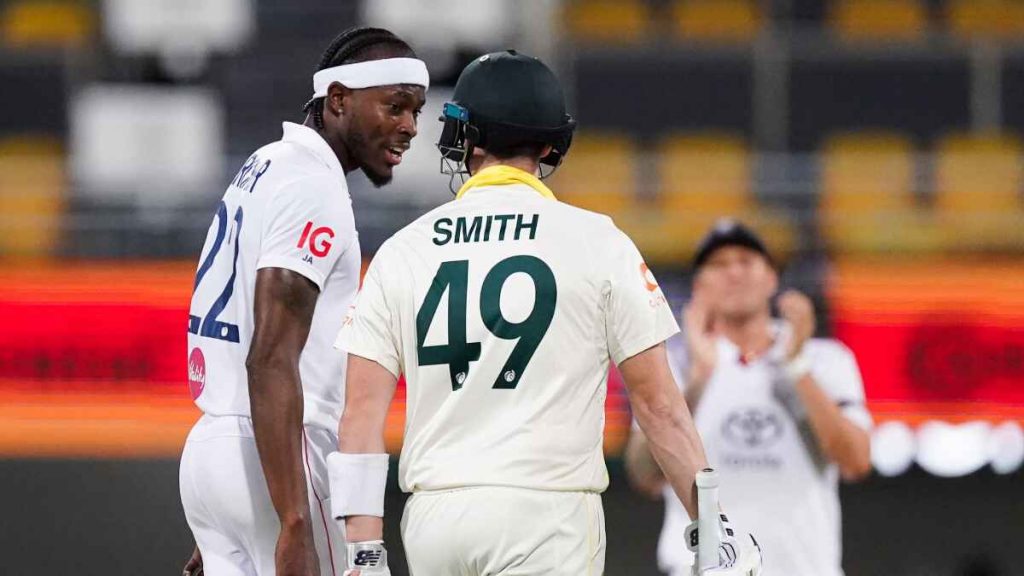
To say England showed no fight would not be completely accurate, as Jofra Archer engaged in a spicy exchange of words with Steve Smith to light the fuse as the first moment of true Ashes on-field tension this series – the only problem being the match was over roughly five minutes later.
The Australian captain’s chirp of “bowl fast when there’s nothing going on, champion” was perhaps also muttered across living rooms back home as England only showed some fire and energy when it was all too late.
The tourists were once again subjected to another demoralising fourth innings in the field as Australia cantered to their victory target – this time only needing 10 all-action overs under the lights in Brisbane.
The current feeling amongst all those concerned is one of frustration, anger, sadness or perhaps foolishness for buying into the belief this England side were truly in a position to succeed where so many teams have historically fallen short.
But this time was meant to be different, it should have been different and whilst hopes of regaining the urn are mathematically still alive, the series now has the feeling of a rescue mission to avoid what could easily unravel into their worst tour in recent memory – and there is some serious competition for that crown.
For exclusive stories and all the detailed cricket news you need, subscribe to The Cricket Paper website, digital edition, or newspaper from as little as 14p a day.

(Robbie Stephenson/PA)
Golden opportunity wasted
But why was this their best opportunity?
The stars were seemingly aligned for England to finally end their 15-year drought against a far from vintage Australian side.
A new exciting brand of cricket, whilst never without its flaws, was geared towards this moment to equip England with the tools to face the Australia challenge head on, assembling a squad as evenly-matched on paper with their opposition when compared to the context surrounding the three previous touring parties.
England were also in a rare position of having their captain and frontline pace attack all fit – though Mark Wood would only last a matter of two days as largely expected – whilst Australia have thus far been without two of their chief quicks, including captain Pat Cummins.
Frustration
Usman Khawaja’s back injury also forced a makeshift change with Travis Head moving up from the middle order and Test rookie Josh Inglis joining debutant Jake Weatherald in a previously misfiring batting line-up, whereas England arrived with a very settled outfit.
If they needed any more boosts, the hosts also opted to leave out spinner Nathan Lyon at home for the first time since 2012, whilst the decision to play the opener away from the historic dominant venue of the ‘Gabbatoir’ also seemed to play into England’s hands.
As for the two Tests themselves, despite the convincing nature of Australia’s victories, England have had opportunities to press home their advantage, which only adds to the frustration.
A lead in excess of 100 with nine wickets in hand was surrendered in remarkable fashion within a session at Perth, whilst last week the England captain inexplicably ran himself out with a platform set, before they went on to put down five catches in the field and toil as the Australia tail built a substantial first-innings lead.

(Robbie Stephenson/PA)
Out bazballed
The big question in the build-up was whether England’s philosophy would work in Australia – and so far the mounting evidence suggests a negative outcome.
That being said, Australia themselves have demonstrated it can be effective when executed at the appropriate time, with a little helping hand from some generous England bowling.
A fourth-innings chase at Perth straight from the Bazball handbook and aggressive pressure exerted from the top order in Brisbane in a manner England could only hope to replicate.
Australia hold a higher series run rate above 4.5, with much of their first innings at the Gabba going along in excess of five runs per over as Weatherald demonstrated his attributes as a positive selection to solve their opener conundrum.
For Australia’s “Dad’s Army” and “worst team in 15 years”, they have certainly done their talking on the field in playing England at their own game.
Have they got their pace strategy right?
There was much excitement and anticipation as England named their most hostile pace attack to arrive on Australian shores.
This was all part of the long-term plan to move on from the greats of James Anderson and Stuart Broad, to assemble a unit of 90mph+ bowlers who could enjoy success on Australia’s fast and bouncy pitches.
And the first day in Perth certainly justified such strategy, though unfortunately that performance appears to be more of an anomaly at this current moment in time.
From one of their best bowling efforts in modern times to arguably their worst in Brisbane, certainly in the McCullum-Stokes era, England lacked any sort of Test match discipline and were far too loose in comparison to their Australian counterparts.
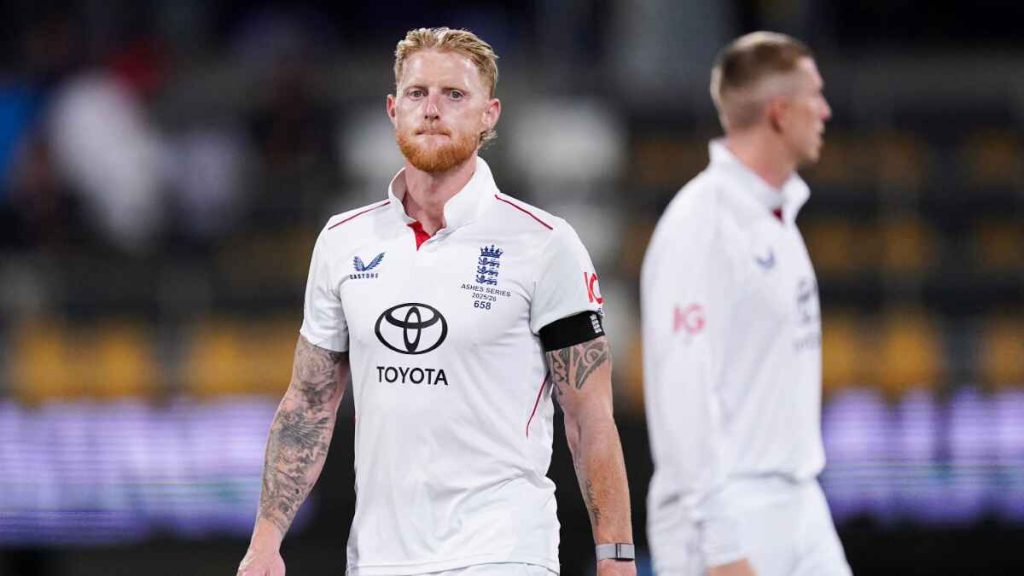
Archer has had a frustrating time so far and certainly would consider himself a little unlucky not to have more wickets to his name – but he remains England’s biggest threat despite experiencing notable reductions in airspeed on return spells, which will call into question his durability for the game’s longest format.
Gus Atkinson is showing signs of a bowler who is still building up after missing the entire summer through injury, whilst Brydon Carse’s untidy figures, despite the four wickets, were perhaps a victim of England’s desperate early switch to the short-ball ploy – a tendency seen all too frequently.
(Robbie Stephenson/PA)
Pace-heavy battery
Steve Smith warned ahead of the series that England may be too heavily reliant on the pace-heavy battery at their disposal, instead highlighting that changes to the Kookaburra ball and Australian pitches over recent years has made it more challenging for batters to face bowlers who primarily generate swing and seam movement.
England found themselves undone by just that in Brisbane, as 35-year-old Michael Neser came into the side for his third Test appearance to claim six wickets in the match, bowling modest speeds with the wicketkeeper up to the stumps.
The irony in England’s Ashes campaign perhaps not being as far away from typical conditions experienced in the largely neglected County Championship as the management seem to believe, whilst being undone by an Australian who has been a regular overseas feature in the English domestic game.
For all the hype around England’s pace cartel, there is a one-dimensional feeling around their hit the pitch hard collective, with a distinct lack of control from one end, which would potentially enable their strike bowlers to flourish more consistently.
Who has not come to the party?
It would be easier to say who has come out of these two Tests with their head held high.
Joe Root superbly constructed his maiden Test century in Australia and did not deserve those special scenes to be reduced to a footnote in another dismal England Test defeat Down Under.
Ben Stokes was his usual heart-on-sleeve self and along with Ashes debutant Will Jacks, demonstrated some much-needed traditional fight with the bat on day four – the Australian celebrations for their dismissals were notably lively as a result of actually having been made to work for them.
The bowlers cannot be accused of a lack of effort but have simply failed to execute their plans consistently, whereas it is with the bat where the biggest concern lies moving forward.
The repetitive nature of soft dismissals has become a plague, an apparent inability to learn from previous mistakes and a stubbornness that their methods supersede the conditions in front of them.
Zak Crawley showed promise in response to his pair in the first Test, though it was somewhat fitting that himself and Ollie Pope – the two biggest beneficiaries of the Bazball era – both fell in the exact same predictable manner within the space of four overs of one another.
Ben Duckett has some credit in the bank but currently looks a shadow of his former self, whilst Harry Brook’s wild drive outside off against Mitchell Starc in the twilight period will probably be pinpointed as the moment English fans lost all hope this series – a mindless decision by Bazball’s poster boy that was certainly not befitting of someone in his leadership role.
Mental fatigue
The two wicketkeepers were highlighted as a potential key decisive battle in the outcome of this series, and unfortunately for England, that has been even more one-sided than the contest as a whole.
Jamie Smith, the chosen one to solve England’s search for a long-term gloveman, has quite frankly been a deer in the headlights on his first Ashes tour – in contrast to the experienced Alex Carey, who produced a masterclass behind the stumps and also added valuable runs with the bat as he so often does.
Two single-figure scores, an early dropped catch and one later not even attempted made it a difficult introduction to pink ball cricket for the 25-year-old, who was sarcastically cheered by the Aussie crowd every time the ball was thrown in his direction.
A talented player who has made himself an all-format regular this year, but the mental fatigue shown towards the end of the India series does not appear to have faded and now a worrying run of form with the bat developing for someone England have invested so heavily in.
(Robbie Stephenson/PA)
Fundamental issue
It was in August 2022 when then South African captain Dean Elgar firmly shouldered arms and made a bullish prediction around the sustainable success of a burgeoning ‘Bazball’ style that had just dispatched New Zealand ahead of their upcoming encounter.
Before leading his side to become the first to beat McCullum’s England, he questioned the longevity around their thrill-seeking approach and firmly stated it could leave them looking foolish in the long run with embarrassing consequences.
Well maybe this is what Elgar foreshadowed.
It is easy when things are going wrong to cast doubt on the tenure as a whole, but there were not too many complaints when Jonny Bairstow was smashing it around Trent Bridge to reach a target of 299 in 50 overs against New Zealand three years ago – or just a matter of this summer when Ben Duckett led a fourth-innings chase of 371 against India.
But what do England really have to show for the past three and a bit years beyond beating teams they were probably expected to and moments of individual brilliance?
A brand of cricket that breathed much needed life into a stale and underperforming Test environment, but now feels it has placed greater emphasis on the entertainment factor at the expense of results, whilst becoming increasingly the subject of much ridicule.
A failure to beat Australia or India and a clear sense that their approach, as well as the fundamental ability of the batters, is heavily skewed towards flat surfaces and conditions that suit.
Ethos
Assistant coach Marcus Trescothick doubling-down they will stick to their principles after another self-destruction and also suggesting no conversations were had around clear areas of weakness indicates we cannot expect things to change any time soon either – commendable or outright insanity is for you to decide.
But Steve Smith describing the Australian way of playing as adapting to conditions and playing the game in real time seems a far cry from England’s fixation on a one-size-fits-all method that has proved second best so far.
Is the overriding ethos of Bazball an issue? Many would argue no. But the problem lies somewhere in their preparation, mentality and skill level – most likely a combination of all three.
The environment created to express freedom without fear of consequence has fostered a group of players who certainly care but often appear to display no evidence of accountability or acknowledgment of game awareness.
Instead, they have something to fall back on as an excuse to run away from pressure when the going gets tough – and Ben Stokes and Joe Root the only real exceptions to that.
For reference, Mitchell Starc and Scott Boland – Australia’s number nine and 10 – faced more deliveries during the Gabba Test than Ben Duckett, Ollie Pope, Harry Brook and Jamie Smith across their two innings.

(Robbie Stephenson/PA)
Where to next?
Only one team has ever successfully overturned a 2-0 deficit in a five-match series (Australia in the 1936-37 Ashes under Don Bradman), though if there is any small consolation for England, they did come very close to doing so in 2023.
Quite clearly, this is a much different beast and damage control to restore some pride certainly feels the primary objective from now on, regardless of how hopeful England say they remain.
Will England make changes for Adelaide? We know it is not in their nature to upset the makeup of the side where possible, but Stokes’ strong words post-match implied that could well be the case, with the likes of Jacob Bethell and Josh Tongue waiting in the wings.
The Ashes is always a defining series for any England side and unless they can somehow find a way to conjure three straight wins, the Brendon McCullum-Ben Stokes era born in the aftermath of disappointment Down Under four years ago is set for another cycle without a statement victory.
Only a win in Adelaide will do. England may still be alive and kicking in this series for now, but Bazball is rapidly approaching borrowed time.
READ MORE: England skipper Ben Stokes fires Ashes warning: ‘Australia is not for weak men’